How to Use Miswak: A Step-by-Step Guide for Beginners
Wondering how to use miswak for the first time? The process is simple. You prepare one end of the stick, soften its natural fibers, and use them to clean each tooth gently. This guide explains how to prepare miswak, how to brush with miswak, and how to keep it clean after use.
If you are new to this traditional oral-care tool, first read our guide: What Is Miswak?
What Do You Need?
- 🌿 One clean miswak stick
- 💧 Clean water
- ✂️ Clean scissors or a small knife
- 🧴 A clean, ventilated holder
Wash your hands before touching the end that will go into your mouth.
How to Prepare Miswak
1. Inspect the stick
Take the miswak out of its package and check it. Natural changes in shape, thickness, and color are normal. However, do not use a stick with visible mold, contamination, or a strongly unpleasant smell.
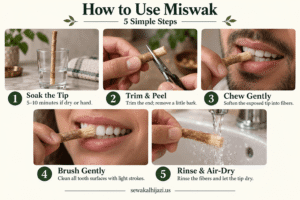
2. Remove a small amount of bark
Use clean scissors or a knife to trim the end if needed. Carefully remove about 1/2 inch (1–1.5 cm) of bark. Do not peel too much. A short tip is easier to control while brushing.
3. Soften the tip
Gently chew the uncovered end until its fibers separate and look like small brush bristles. You can also wet the tip and carefully separate the fibers with clean fingers.
How long should you soak miswak? A fresh and soft stick may only need a quick rinse. If the tip feels dry or hard, place only the exposed end in clean water for 10–15 minutes. Do not soak the entire stick for many hours.
4. Rinse before brushing
Rinse the softened fibers with clean water. Your natural miswak toothbrush is now ready to use.
How to Brush With Miswak
1. Hold it comfortably
Hold the miswak like a pencil or in any position that gives you good control. Keep your hand relaxed and avoid pressing hard.
2. Clean the front teeth
Place the soft fibers against your teeth. Use short, gentle strokes to clean the outside of your upper and lower front teeth. Brush near the gumline carefully without pushing the fibers into your gums.
3. Clean every tooth surface
Move to the back teeth on both sides. Clean the outside, inside, and chewing surfaces. To reach behind the front teeth, hold the miswak vertically and use small up-and-down strokes.
Follow the same order each time so you do not miss an area:
- 🦷 Upper teeth: outside, inside, and chewing surfaces
- 🦷 Lower teeth: outside, inside, and chewing surfaces
- 👅 Gumline and hard-to-reach areas with light pressure
Gentle and complete cleaning is more important than fast or forceful brushing.
How Often to Use Miswak
You can use miswak as part of your daily oral-care routine and after meals when convenient. There is no single schedule for everyone. Your technique, consistency, and personal dental needs matter most.
For people in the USA, the American Dental Association recommends brushing twice a day with fluoride toothpaste and cleaning between the teeth daily. Miswak can be used alongside that routine. Ask your dentist before making major changes to your personal dental care.
How to Clean and Store Miswak
After brushing, follow these easy steps:
- 🚿 Rinse the fibers with clean water.
- 💨 Shake off extra water and let the tip air-dry.
- 🧴 Store it in a clean holder with ventilation.
- ☀️ Keep it away from heat and direct sunlight.
Do not leave a wet miswak inside a tightly closed container for a long time. Also, never share your miswak with another person.
When Should You Cut the Used Tip?
Cut off the brush end when the fibers become worn, dirty, too soft, or uneven. Then remove a small new section of bark and prepare the fresh tip again. The timing depends on how often you use it, so inspect the fibers before each use.
Common Mistakes to Avoid
- ❌ Brushing too hard
- ❌ Using a dry, stiff tip
- ❌ Cleaning only the visible front teeth
- ❌ Keeping worn fibers for too long
- ❌ Storing the stick while it is dripping wet
- ❌ Sharing the same stick with someone else
Frequently Asked Questions
Do I need toothpaste with miswak?
Miswak is commonly used with water and does not require toothpaste on its fibers. To receive the cavity-protection benefits of fluoride toothpaste, continue the brushing routine recommended by your dentist.
Does miswak replace floss?
Miswak fibers may not reach every tight space between teeth. Clean between your teeth daily with floss or another interdental cleaner recommended by your dentist.
What if my gums bleed?
Stop and check whether the fibers are stiff or you are applying too much pressure. Contact a dentist if bleeding continues or you have pain, swelling, or sensitivity.
Final Thoughts
Learning how to use a miswak stick takes only a little practice. Prepare a short, soft tip, clean every tooth surface gently, rinse the fibers, and store the stick where it can dry. Good technique and regular dental care will help you build a safer, more effective oral-care routine.
This content is for general education and does not replace professional dental advice.