Miswak vs Toothbrush: A Simple Guide to Daily Oral Care
Miswak vs toothbrush is a common comparison when you first discover natural chewing sticks. Both can clean tooth surfaces, but they differ in preparation, shape, and everyday use. So, should you choose one or keep both?
The short answer: miswak can be an additional cleaning tool, while a soft toothbrush with fluoride toothpaste remains part of standard dental advice. Understanding their differences helps you build a routine that works for you.
🌿 Miswak vs Toothbrush: What Is the Difference?
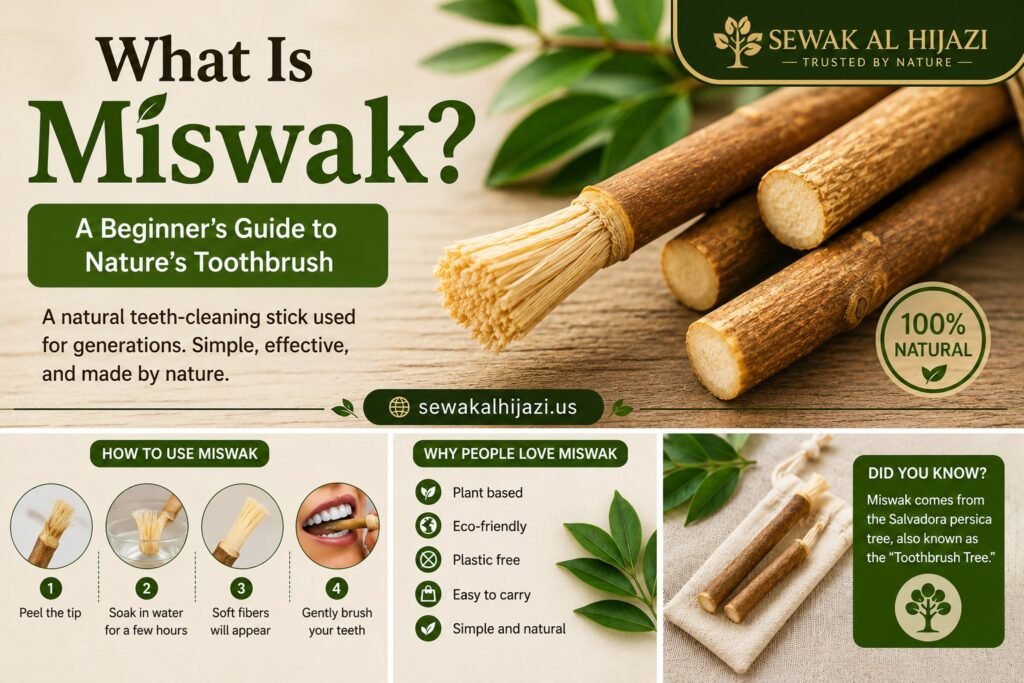
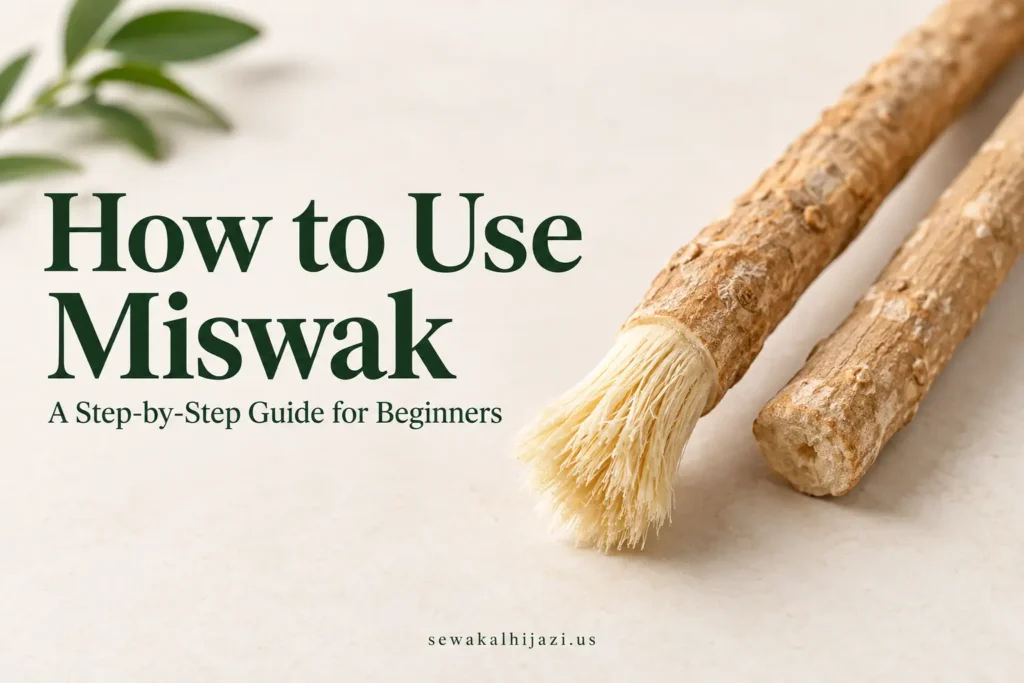
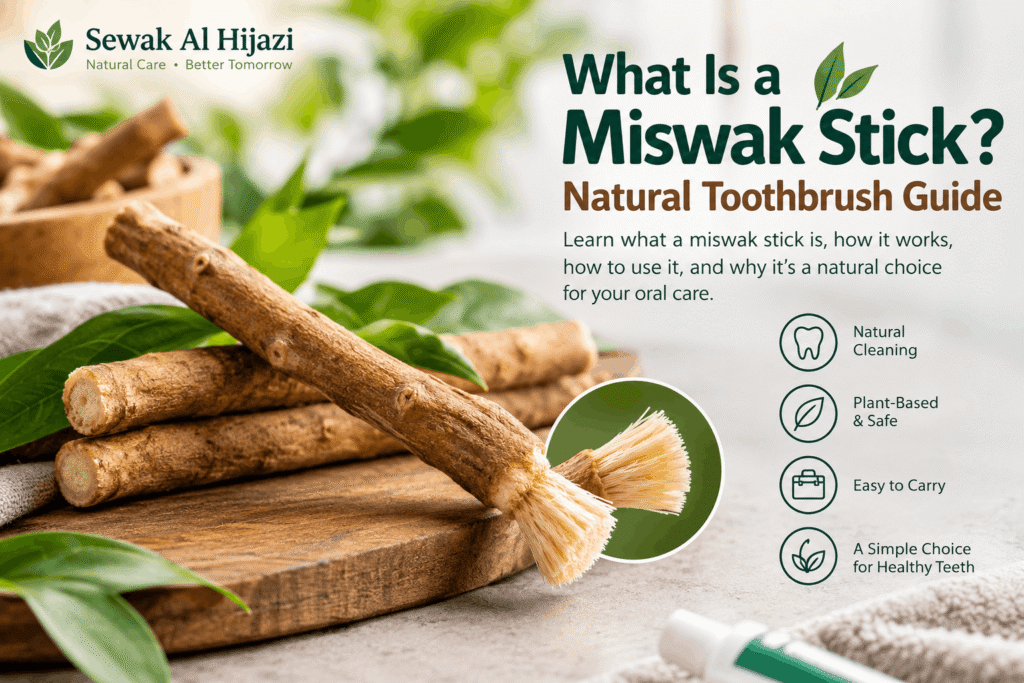
Miswak is a plant-based stick, commonly sourced from Salvadora persica. You uncover and soften one end until its fibers form a small brush. A regular toothbrush has a shaped handle and ready-made bristles.
If this is new to you, our beginner’s guide to miswak explains its background. For a closer look at the material and fibers, read our natural toothbrush guide.
| Feature | Miswak | Regular Manual Toothbrush |
|---|---|---|
| Brushing tip | Natural plant fibers | Manufactured bristles |
| Preparation | Peel and soften the tip | Ready to use |
| Daily upkeep | Rinse, dry, and refresh worn fibers | Rinse, dry, and replace when needed |
| Toothpaste | Often used without it | Used with fluoride toothpaste |
🦷 How Do They Clean Your Teeth?
Both tools rely on contact between the brushing surface and your teeth. Gentle movement helps remove plaque and food debris from areas you reach.
A toothbrush head sits at an angle to its handle. Miswak fibers extend from the end of the stick, so reaching inner surfaces and back teeth may take practice.
In the miswak vs regular toothbrush comparison, technique matters. Neither tool cleans an area you skip. Move around your mouth in a steady order rather than brushing only the visible front teeth.
Research has found promising results for miswak in plaque and gum care, but brushing methods and study conditions vary. Our miswak benefits article explains these findings and their limits.
💧 Miswak and Toothpaste: Why Fluoride Matters
Miswak and toothpaste play different roles. The stick provides fibers for physical cleaning; fluoride toothpaste provides protection against cavities.
The American Dental Association recommends brushing twice daily with a soft-bristled toothbrush and fluoride toothpaste. It also recommends cleaning between teeth every day.
Using a natural toothbrush does not automatically provide the same fluoride protection. If you enjoy miswak, consider it alongside your regular routine rather than assuming it replaces every part of dental care.
✈️ Which Is Easier to Carry and Maintain?
Both a miswak and a manual toothbrush fit into a travel bag without needing batteries.
Miswak needs preparation and regular checks of its fibers. A toothbrush is ready to use, although its bristles also wear out.
Whichever you carry, rinse it after use and allow it to dry. Avoid sealing a wet cleaning tool inside a closed case for long periods. Keep it separate from dirty surfaces and never share it.
For miswak, follow the storage directions on the package.
✅ Can You Use Miswak and a Toothbrush Together?
Yes, you can include both in your routine. Keep your morning and evening fluoride brushing, and use miswak at another convenient time if it feels comfortable.
Use light pressure and soft fibers. Extra scrubbing is not the goal, and more frequent use should not leave your gums sore.
Our step-by-step guide to using miswak explains preparation, brushing, and care.
Frequently Asked Questions
Can miswak replace toothbrush use completely?
Do not assume it replaces brushing with fluoride toothpaste or cleaning between teeth. Ask your dentist before changing your main routine, especially if you have existing dental problems.
Miswak or toothbrush: which is better for beginners?
A regular toothbrush needs less preparation. Miswak takes practice, particularly when preparing the fibers and reaching back teeth. Choose tools you can use gently and consistently.
What if brushing causes bleeding?
Avoid forceful scrubbing. If bleeding continues, or you notice pain or swelling, contact your dentist instead of trying to brush harder.
The useful question in miswak vs toothbrush is how well your routine cleans your whole mouth. Keep it gentle, consistent, and suited to your dental needs.